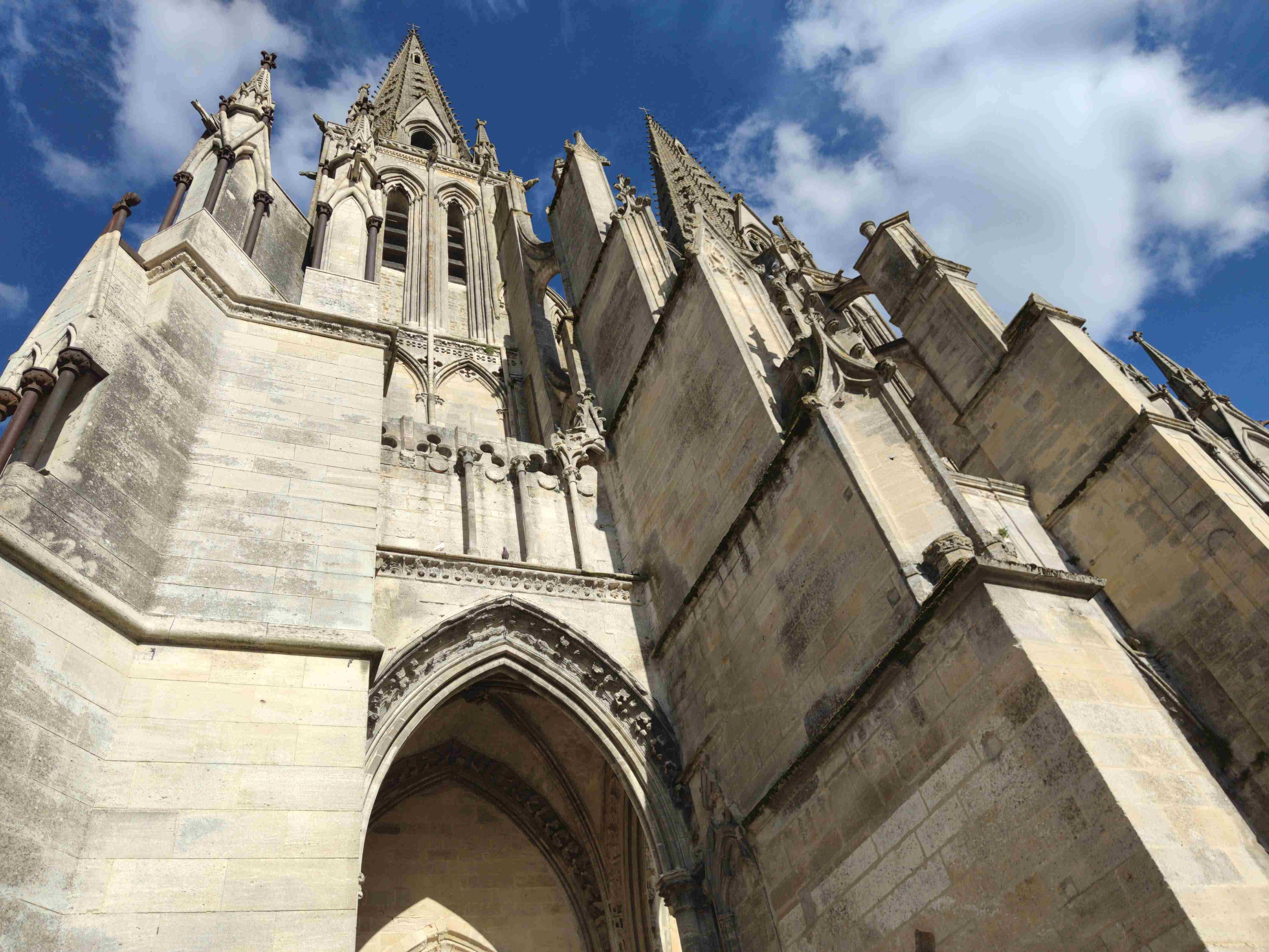
Twenty five years ago I sat in a hall with several hundred people listening to a Catholic priest describing the state of the Roman Church. Those present were a new generation of Catholics who would have been adolescents at the time of Vatican II. I was 50 years old and my generation was well represented at this gathering at Sees, a beautiful Cathederal town in Normandy.
Our childhood had been shaped by the catechism. This was a book as important as the Bible. It was filled with the questions we might be asked by Protestants or other non believers. We leart it by heart just in case a Protestant aksed us a difficult question. It was based, largely, on the conclusions of the Council of trent (1566).
As Catholics we had a shared vocabulary. Mortal sin and venial sin, absolution and Heaven Hell and Purgatory. I made my fist confession when I was six years old and alert enough to know I could not yet commit a sin because I hadn’t reached the age of reason. St. Thomas Aquinas has declared that it is only after our 7th birthday that we can commit sins. I can clearly picture the spot in a friend’s back garden when we were about to steal some apples from the neighbour. “I’ll do it”, I said. You’ve all reached the age of reason. I happened to be a year younger than all my classmates. My school days had begun a year earlier than my friends. My mother was a science teacher. After World War 2, science teahcers were scarce. She only agreed to teach if I could start school. So I went to the infant school in Whiteinch in Glasgow and she taught physics in the secondary school up the road. I was 4 years old and my interest in Theology had begun.
embedded cultural attitudes which shaped our morality, the same sacramental initiation for all and a sound heritage of spiritual wisdom, often armour-plated, and disguised in gold leaf, by a theology shaped by a need to justify, convince and contain; intollerant of other positions. We had been shaped to fit, like corks, we were cast overboard in the shipwreck of a Vatican suddenly out of touch, at least in Western Europe. The betrayal was followed by widespread sexual abuse and financial corruption comin to light which slowly helped undo the claim that this was the only one true Spiritual authority on the planet. Nonetheless we harbour, in this last phase of our lives, an affection for Christianity and an awareness that the wreck contains treasure of infinite value. The raft of corks is a simple metaphor for the simple life-raft those of us who fell or jumped overboard now have to cling on to.
Perhaps the greatest change is that through our own experience God is revealing himself to ordinary people and not, as we were told as children, only through a the authority of the Roman Catholic Church.